The Brunch Outfit for When the Patio Turns Cold

Quick Answer: Sitting still outdoors is far colder than walking there, so the brunch outfit needs a base that works alone indoors, a mid layer you keep on the whole time, and an outer layer that lives on the back of the chair. The specific failure is dressing for the ten-minute walk and then sitting motionless for ninety minutes in the shade.
The patio season stretches well past the patio weather. Heaters help a little, the sun moves behind a building around 11am, and everyone at the table who dressed for the walk over spends the last half hour with their arms crossed.
Why is sitting outside so much colder than walking?
Because you stop producing heat and start losing it in three different ways at once.
Metabolic heat production drops. Walking generates meaningfully more heat than sitting. The moment you sit down, your internal furnace steps down and the outfit that was perfect in motion becomes a layer short.
Conductive loss through the chair. Metal patio chairs pull heat directly out of you, and the effect is significant over an hour. This is why the same temperature feels colder on a metal chair than a wooden one.
The sun moves. A table that is in sun at 9:30 is often in building shadow by 10:30, and the difference between direct sun and shade at the same air temperature can feel like 10-15 degrees.
Wind at ground level. Outdoor seating is frequently on a corner or in a plaza where air moves. Even a light breeze on a still body accelerates heat loss substantially.
All four are predictable, which means the outfit can be built for them rather than endured.
What is the actual three-layer structure?
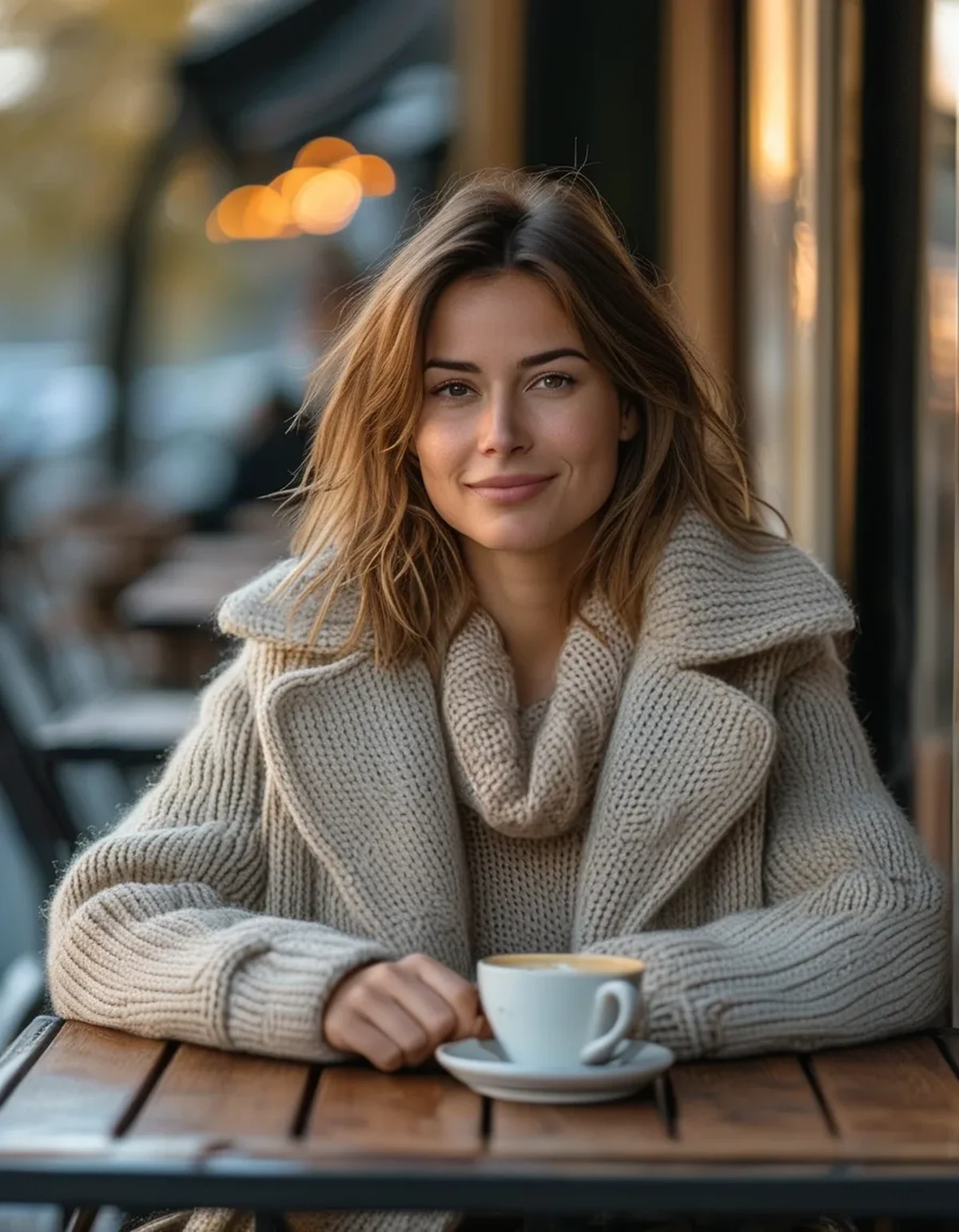
Base: something that looks finished on its own. A fitted knit top, a bodysuit, or a long-sleeve tee in a good fabric. It has to look right indoors, because the moment you move to an inside table the outer layers come off.
Mid: the layer you never remove. A cardigan, a light knit, or a shirt jacket. This is the piece doing the real work, and it should be one you are comfortable wearing for the entire meal. Choose it for warmth per bulk - merino or a fine-gauge knit beats a thick loose cotton at half the volume.
Outer: the chair-back layer. A denim jacket, a trench, or a light quilted jacket. It comes off when you sit in the sun and goes back on when the shadow arrives. Its job is adjustment, not primary warmth.
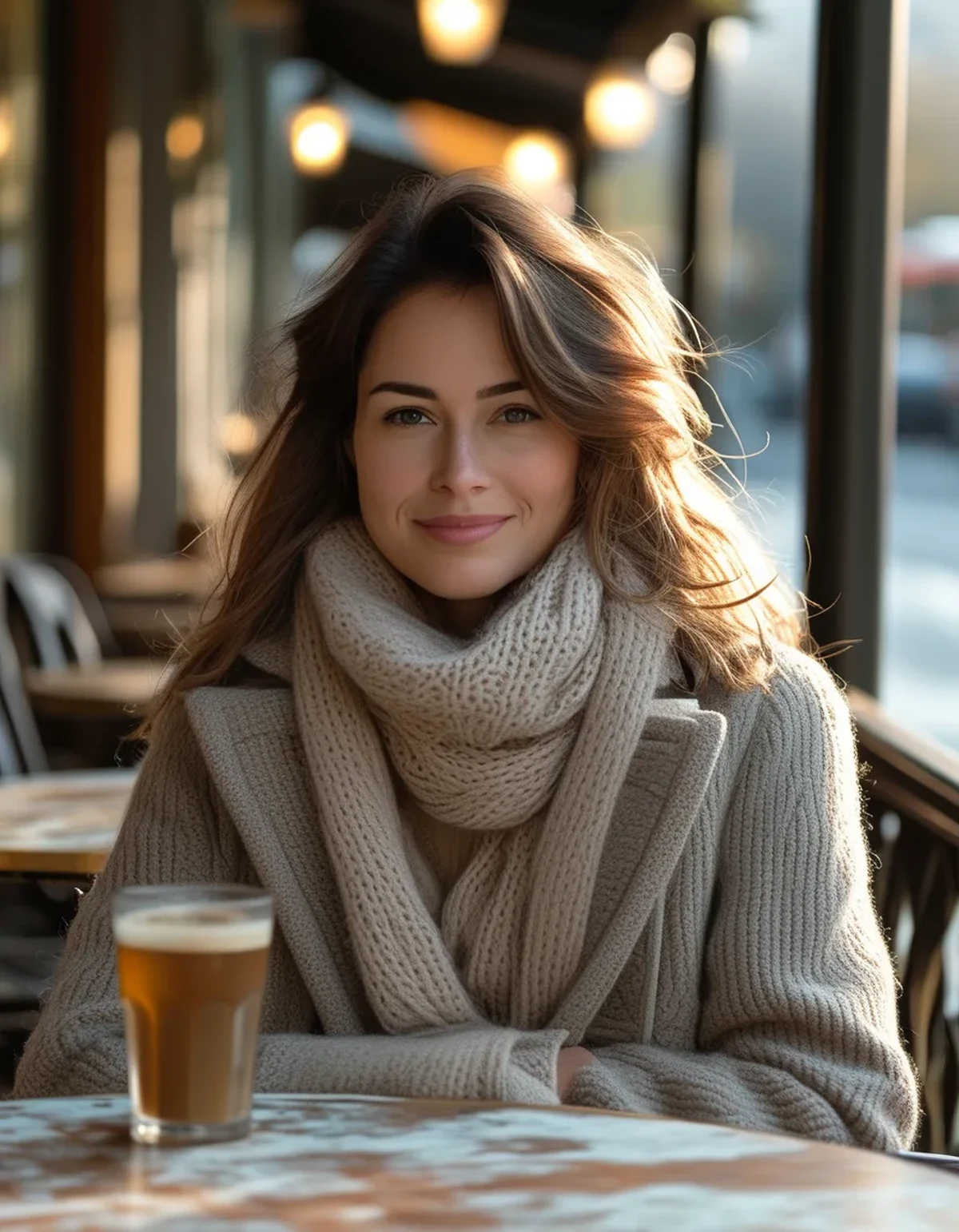
Plus one accessory that punches above its weight. A light scarf. The neck is a significant heat-loss route, it packs into nothing, and it is the difference between comfortable and grimly enduring the last twenty minutes.
Bottom half matters less than people think when seated, with one exception: a longer hem or a covered ankle. Cold ankles under a table are the most common complaint and the easiest to solve with a real sock or a hem that reaches the shoe.
5 Mistakes Everyone Makes Dressing for a Cold Patio
1. Dressing for the walk there. The walk is ten minutes of heat generation. The meal is ninety minutes of sitting still. Dress for the longer, colder half.
2. Bringing one heavy layer instead of two light ones. A single thick coat is either on or off, and neither is right for most of the meal. Two lighter layers give you three usable configurations.
3. Choosing a bulky outer layer that has nowhere to go. Patio chairs have small backs and the floor is dirty. A jacket that folds small is worth more than one that is slightly warmer.
4. Bare ankles. The single most common regret at an outdoor table in September. A visible sock, a longer hem, or a boot solves it and takes no thought.
5. Not asking to move. The most effective styling intervention is a table in the sun. Sun versus shade at the same air temperature is a bigger difference than anything you can wear - ask when you arrive rather than enduring it out of politeness.
What fabrics work best for this?
Merino wool is the standout for the mid layer. It insulates when it is cool, breathes when the sun comes out, and packs down small. A thin merino layer outperforms a much bulkier cotton one across the whole temperature swing.
Denim is a genuinely good outer layer for this specific use - windproof enough to matter, structured enough to hang on a chair back without becoming a heap.
Fine-gauge knits layer under jackets without bulk at the shoulder and elbow, which is where thick knits make everything look and feel awkward.
Quilted and lightly insulated jackets give the best warmth-to-packability ratio and are the practical choice if you commonly find yourself at an outdoor table.
What to avoid: thick loose-knit cotton, which is bulky and does not actually insulate well once wind is involved, and anything unlined and slippery, which reads as summer regardless of what it is doing thermally.
FAQ: Cold Patio Brunch Questions, Answered
What temperature is the cutoff for outdoor dining?
Most people are comfortable seated in 60F and above with sun and no wind, and in about 68F and above without sun. Below that, the outfit is doing more work than the weather.
Do patio heaters actually help?
They heat the side facing them and very little else, and their effect drops off sharply with distance. Useful, and not a substitute for a layer.
What is the single best item to add to a brunch outfit in September?
A light scarf. It weighs nothing, costs nothing to carry, covers the neck, and looks like styling rather than like being cold.
TL;DR:
- Sitting still outdoors loses heat through reduced metabolism, the chair, moving shade, and wind.
- Build three layers: a base that stands alone indoors, a mid layer you keep on, and an outer that lives on the chair back.
- Cover the ankles and add a light scarf - both fix the two most common complaints for almost no bulk.
- Merino and denim beat thick cotton for the transitional patio season.
The patio stays open longer than the weather justifies, and the fix is structural rather than heroic. Three light layers and a scarf, and the last twenty minutes of brunch stop being the coldest part of your weekend.
Keep Reading
This article is for general informational and styling purposes only. Fit, sizing, and product availability may vary.