The Brunch Outfit That Handles a 20-Degree Temperature Swing

Quick Answer: Build the outfit as three removable layers where each layer looks finished on its own: a fitted base you’d wear alone, a mid layer in linen or fine knit, and a light outer layer you can carry. The most common failure is a base layer that only works under something - a bra top or a thin camisole - which leaves you stuck in the outer layer once it’s 30C.
The last few weeks of August produce a specific dressing problem. You leave at ten and it’s genuinely chilly. By the time you’re on the second coffee at half past twelve, the sun is on the terrace and it’s a different season.
Most people solve this by dressing for the afternoon and being cold, or dressing for the morning and being miserable. There’s a better structure.
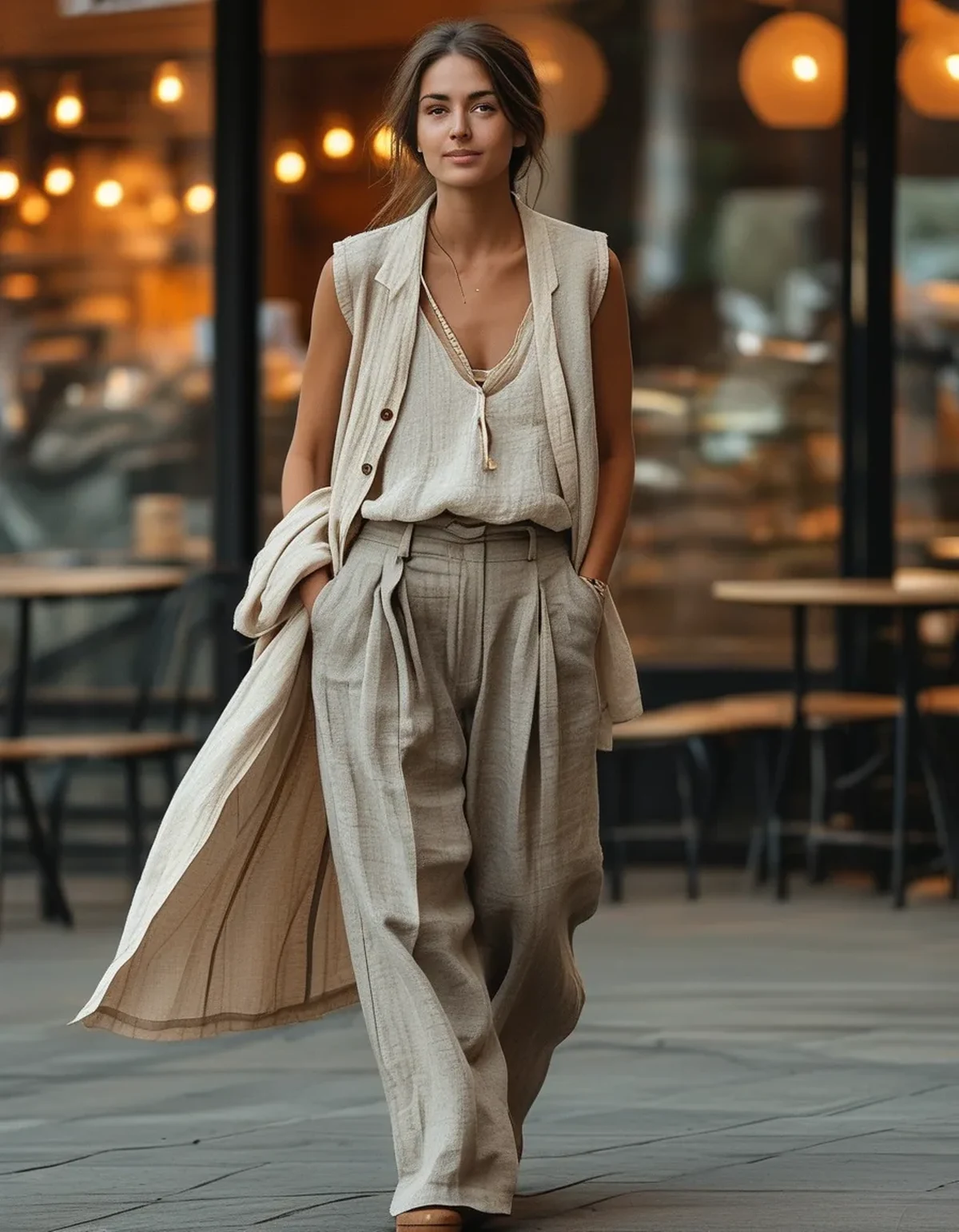
Why does the usual layering advice fail here?
Because it treats layers as functional rather than as outfits, and that only works if you never remove anything.
The standard advice - base, mid, outer - comes from outdoor and hiking contexts where nobody cares what the base layer looks like on its own. At brunch, every configuration is seen. You’ll be in all three layers walking there, two inside, and one on the terrace at one o’clock.
Which produces the actual rule: each layer has to look finished by itself. A thin camisole that’s clearly underwear-adjacent means you can’t remove the shirt. A base layer that only works under something is what leaves people sitting in a jacket in the sun.
The second failure is a mid layer that can’t be carried. A cardigan you can knot or fold takes up no hands. A structured jacket has to be hung on a chair back, and there’s usually nowhere to put it.
Third failure: fabric that doesn’t behave across the range. Heavy cotton feels good at 15C and is unpleasant at 30. Linen is comfortable across the whole range because it’s breathable enough for heat and the weave still blocks a breeze.
And a fourth that’s specific to late August: dressing for the season you think it is rather than the temperature it is. The instinct at the end of August is to reach for autumn colours and textures. A wool-blend anything at 30C is a bad afternoon regardless of what the calendar says.
What’s the actual structure?
Three layers, each with a specification.
Layer 1 - the base, and the one people get wrong.
- A fitted tank, a fine short-sleeve knit, or a good t-shirt. Something you’d genuinely wear alone at a table.
- Ribbed cotton or a fine merino - merino sounds wrong for summer and it’s excellent, because it regulates temperature and doesn’t hold odour across a long warm day.
- In a colour that works with both other layers, since it’s the piece that’ll be visible in every configuration.
Layer 2 - the mid layer, the workhorse.
- An oversized linen shirt, a fine-gauge cardigan, or a light overshirt
- Must be foldable or knottable. Around the waist, over the shoulders, into a tote.
- This is the layer that comes on and off three times, so it needs to be the easiest to manage.
Layer 3 - only if the morning is genuinely cold.
- A light jacket or a large scarf. In late August a big scarf often does the job with far less to carry.
- Leave it at home if the forecast low is above about 18C.
And the bottom half, which people forget is also a temperature decision:
- Wide-leg linen trousers or a midi skirt - both work across the whole range because air moves through them
- Not jeans. Comfortable at 15C, genuinely unpleasant at 30C, and no way to adjust.
Shoes: something you can walk in that isn’t closed and hot. A flat leather sandal with a back strap, or a loafer worn without socks.
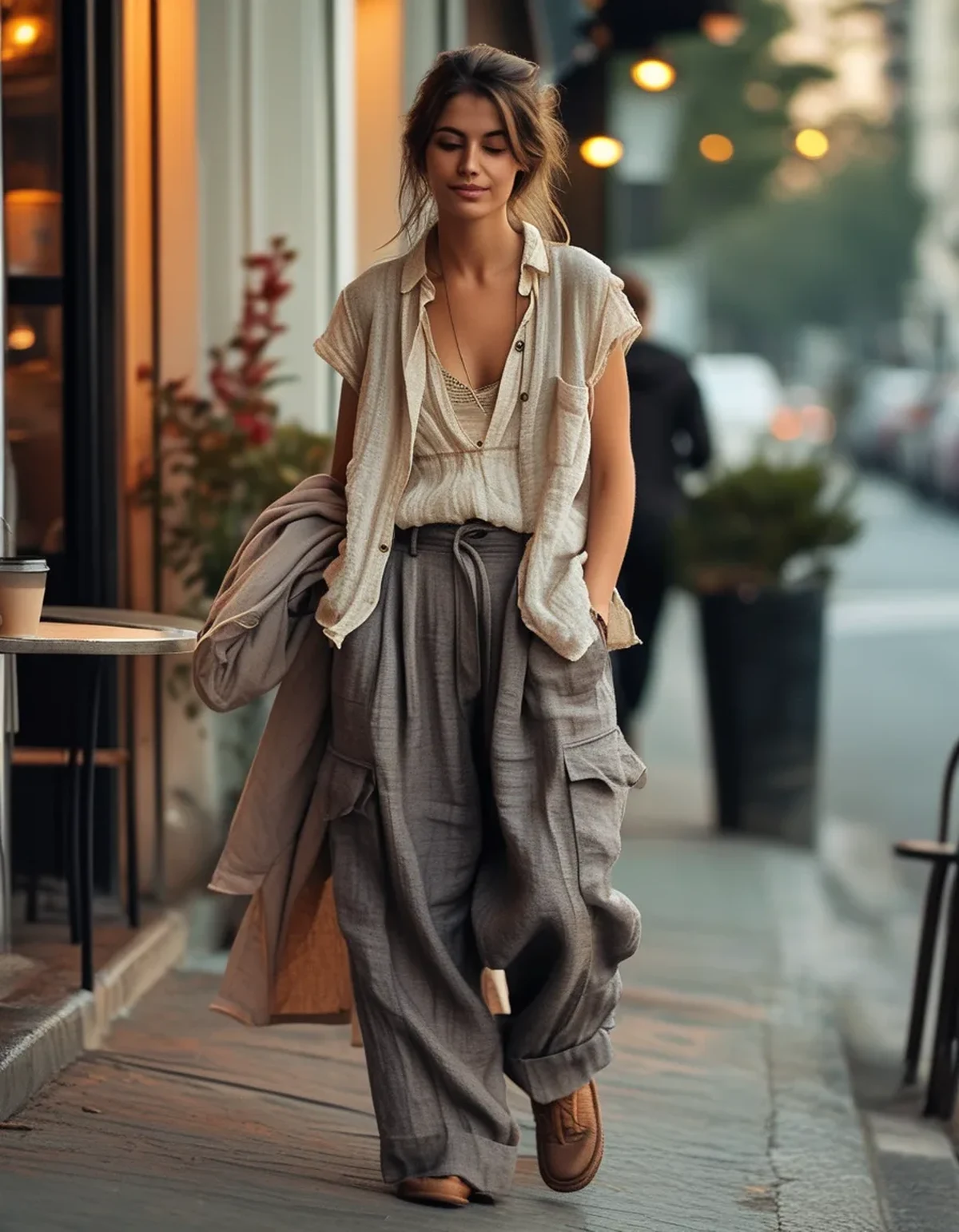
What Nobody Tells You About Dressing for a Temperature Swing
Five things that only become obvious after a few uncomfortable brunches.
Restaurant air conditioning is the actual variable, not the outside temperature. Many places run cold, which means the coldest part of your day may well be sitting inside at one o’clock while it’s 30C on the pavement. The mid layer exists for the terrace-to-interior transition as much as for the morning, and this is the reason to keep it with you rather than leaving it in the car.
Colour affects temperature meaningfully outdoors. Dark colours absorb noticeably more solar radiation, and on a sunny terrace the difference between a black shirt and a cream one is genuinely felt. Light colours for the outer layer, if you’re likely to be sitting in the sun.
Fabric weight matters more than fabric type. A heavy linen is warmer than a fine cotton poplin. Look at how much light passes through when you hold it up - that’s a better proxy for how it’ll behave than the fibre name.
Sleeves are more adjustable than you’d think. A rolled sleeve versus a full sleeve is a real temperature difference, and it’s an adjustment you can make at the table without taking anything off. Choose shirts with sleeves that roll and stay.
A tote solves the layer problem entirely and nobody plans for it. The reason people end up wearing a jacket in the heat is that they have nowhere to put it. A bag big enough to hold the mid layer changes the whole calculation, and it’s the least glamorous and most useful item in this article.
Five Outfit Formulas That Work Across the Swing
1. The linen shirt formula. Fitted tank + oversized linen shirt + wide-leg linen trousers + flat sandals + tote. The default. Works from 15C to 32C with nothing more than removing and rolling.
2. The midi dress formula. Sleeveless midi dress + fine cardigan + trainers or flat sandals. The dress does all the work; the cardigan is the only variable. Best if the swing is at the milder end.
3. The knit vest formula. Short-sleeve shirt + fine knit vest over it + tailored shorts or a skirt. The vest reads as styling rather than as warmth, which means you can keep it on longer than a cardigan and it comes off without changing the outfit’s logic.
4. The overshirt formula. Fine merino tee + light cotton overshirt worn open + straight trousers + loafers. The most polished of the five, and the overshirt folds small.
5. The scarf formula. T-shirt + midi skirt + a very large lightweight scarf. The lightest option and the most adaptable - wrapped in the morning, over the shoulders inside, in the bag by two. Costs almost nothing to carry.
One thing common to all five: the base layer would look completely fine as the whole outfit. That’s the test. If you’d feel underdressed with everything removed, the outfit doesn’t handle a 20-degree swing - it just handles the morning.
FAQ: Temperature Swing Dressing, Answered
How do I check what the swing will actually be?
Look at the hourly forecast rather than the daily high and low - what matters is the temperature at the hours you’ll be out. A 10-degree swing between 10am and 2pm needs different handling than the same swing spread across a full day.
Is merino really suitable for summer?
Yes, in fine weights. Merino regulates temperature in both directions, wicks moisture, and resists odour - which is why it’s used in warm-weather travel clothing. A fine merino tee is one of the more useful late-summer items there is.
What about the humidity?
Humidity makes heat feel considerably worse and reduces how well evaporation cools you. In humid conditions, prioritise loose fits and breathable fabrics over layer count - linen and cotton over anything synthetic, and nothing tight against the skin.
How do I stop the mid layer looking crumpled after being in a bag?
Choose fabrics that either don’t crease or look intentional when creased - linen is squarely in the second category and nobody minds. Avoid fine cotton poplin and anything with a pressed finish, which look genuinely creased rather than relaxed.
TL;DR:
- Every layer has to look finished on its own - that’s the rule the standard advice misses
- Base: fitted tank or fine merino tee you’d wear alone. Mid: linen shirt or fine cardigan you can knot or fold
- Skip the third layer entirely if the forecast low is above about 18C; a big scarf usually covers it
- Wide-leg linen or a midi skirt on the bottom - not jeans, which have no adjustment range
- Restaurant air conditioning is often the coldest part of the day, so keep the mid layer with you
- Carry a tote; nowhere to put a layer is why people end up wearing it in the heat
The test is simple: if you’d feel underdressed with every layer removed, the outfit only handles the morning.
See It in Motion
Seen here: High Waist Wide Leg Yoga Pants with Pockets — shop it on bubblelime.com
Keep Reading
This article is for general informational and styling purposes only. Fit, sizing, and product availability may vary.