The Brunch Outfit for an Outdoor Table in Autumn

Quick Answer: Dress for an outdoor autumn table in three removable layers, put the warmth in the layers you can take off rather than the base, and pay disproportionate attention to your feet and your back - the two coldest places when you are sitting still. A wrap or large scarf that can go over your knees is worth more than a heavier coat, because a seated body loses heat differently to a walking one.
Sitting still outdoors at 13°C is considerably colder than walking outdoors at 13°C, and almost everyone dresses for the walk.
Why is sitting outdoors so much colder than walking?
Because you stop generating heat, and because you lose it through the chair.
Walking generates substantial body heat. Sitting generates very little. The same outfit that felt right on a fifteen-minute walk to the restaurant becomes inadequate within twenty minutes of sitting down, which is exactly the point at which the food arrives and leaving is not an option.
Conduction through the chair is the underrated part. A metal cafe chair is an efficient heat sink, drawing warmth from you continuously. Your back and the backs of your thighs lose heat directly into the furniture, and no amount of coat over your shoulders addresses it.
Your feet stop moving too. On a walk, the muscle activity in your legs and feet generates heat and keeps blood moving. Sitting still on a cold paving stone, feet are the first thing to go.
The patio heater adds a further complication: it warms you from one direction only. You end up with a warm face and shoulders and a cold back, which feels strange and is not solved by removing a layer.
The design implication: put the insulation where it addresses conduction and stillness - a wrap over the legs, something between you and the chair, and warm feet - rather than simply adding a heavier coat.
What should the three layers actually be?
Base, mid, and outer, with the warmth concentrated in the middle and outer layers.
Base: something thin and comfortable. A fine knit, a long-sleeve top, or a shirt. Do not make this layer warm, because it is the one you cannot remove if you end up next to the heater.
Mid: the workhorse. A proper knit - wool or wool blend, mid-weight, ideally with some length so it covers your lower back when you sit. This is where most of the warmth should live, because it comes off easily indoors.
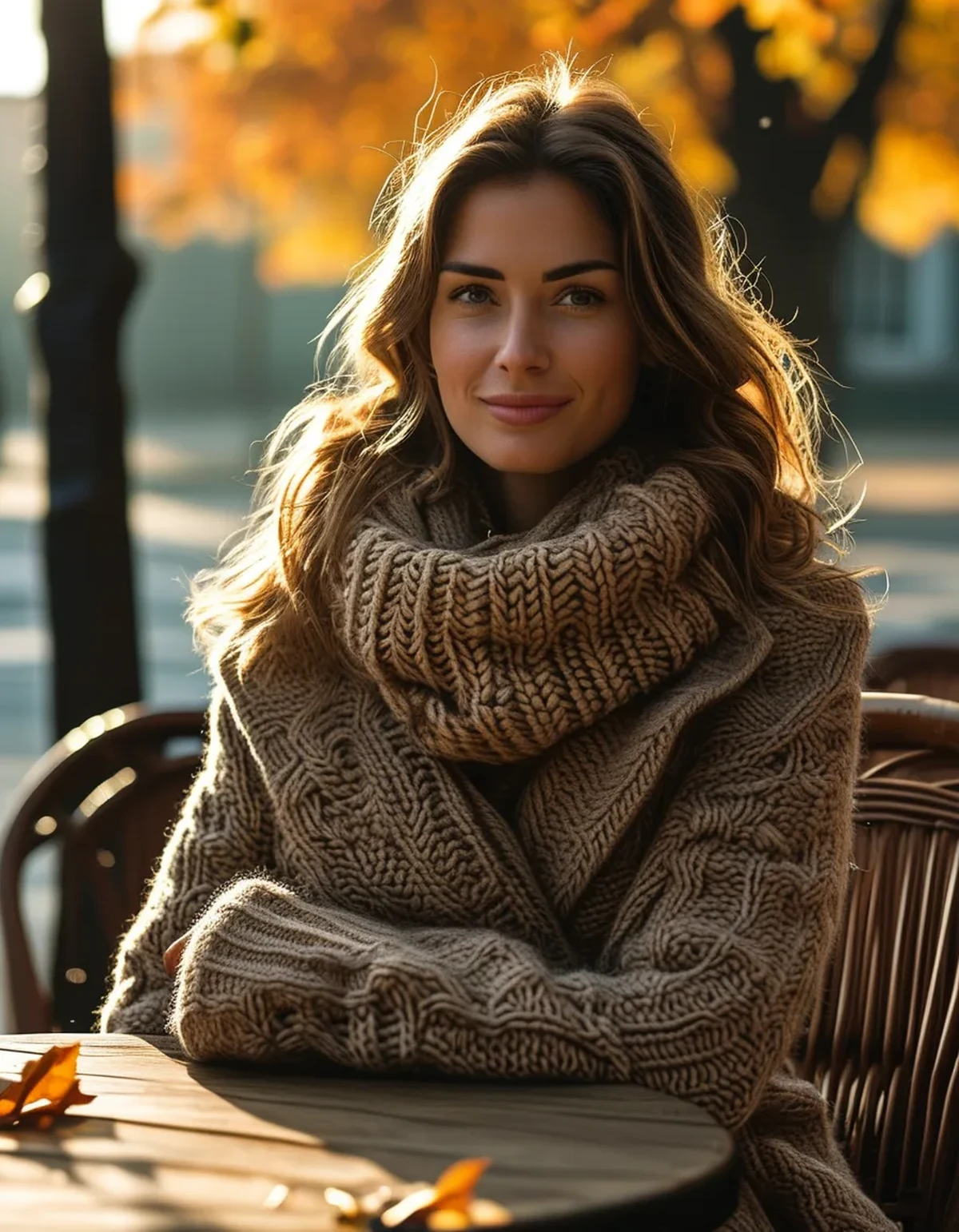
Outer: something you can wear seated. This matters more than it sounds. A structured coat is awkward in a chair, whereas a long cardigan, a wrap coat, or a soft unstructured jacket can be worn while eating without restricting your arms.
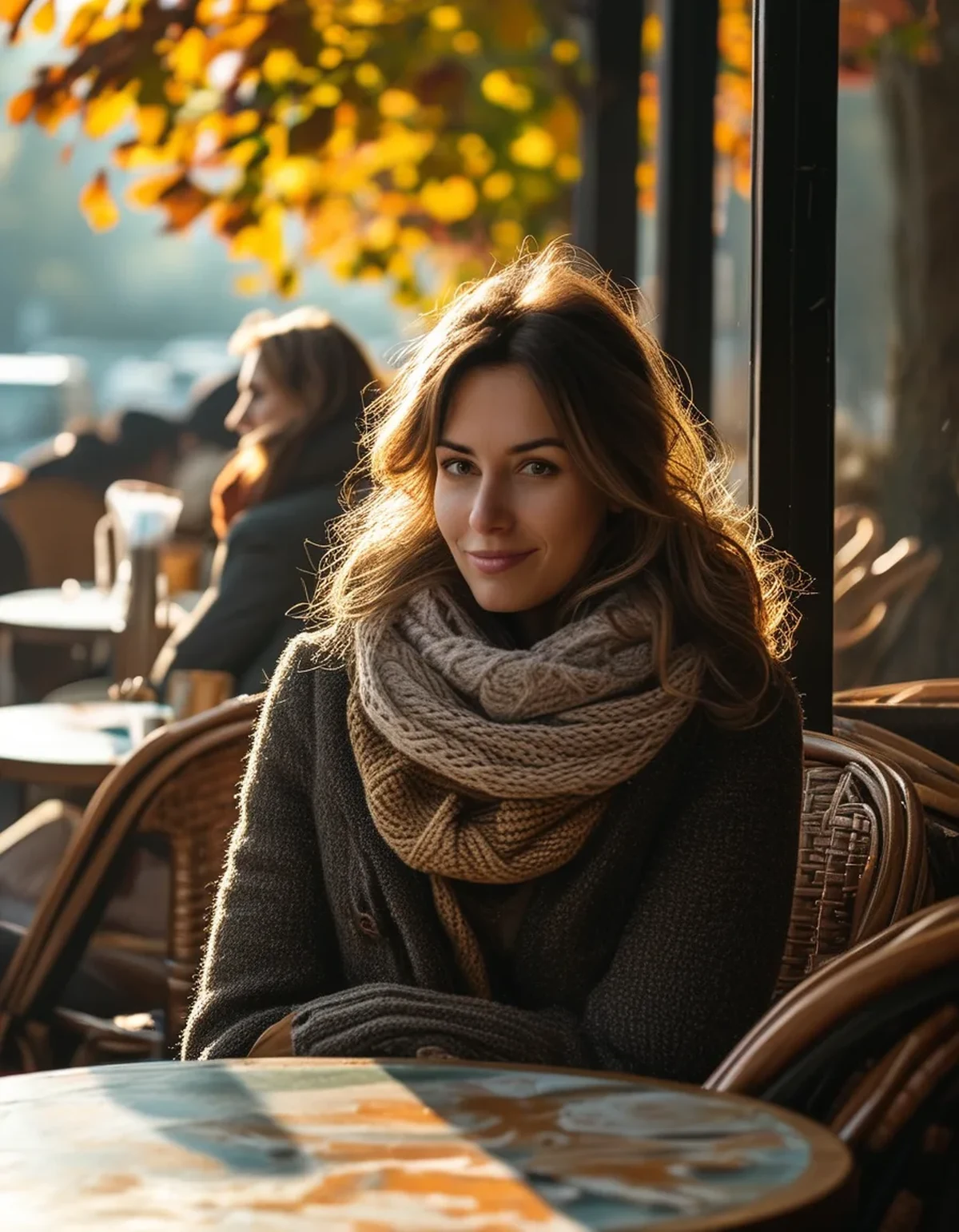
Plus the fourth item that matters most: a large scarf or a wrap. Big enough to go over your shoulders, or over your knees, or draped over the back of the chair between you and the metal. This single item solves more of the problem than upgrading any of the three layers, because it is the only one that addresses conduction and the lap.
Fabrics that work seated: wool, cashmere blends, heavy cotton, corduroy. Fabrics that do not: anything that creases visibly under a seatbelt or a chair back, and anything so structured it fights the seated position.
What about the bottom half and the feet?
This is where autumn brunch outfits usually fail, because everything above the waist gets the attention.
Trousers over a skirt for a genuinely cold table, unless the skirt is long and you have tights and a wrap. Bare legs at an outdoor table below about 15°C is uncomfortable within half an hour, no matter how good the coat is.
The best options: a heavier trouser - wool blend, corduroy, thick denim, or a ponte bootcut - or a long skirt with opaque tights. A thin trouser conducts cold from the chair straight through.
Feet need more than usual. A closed shoe, a proper sock, and ideally a sole with some thickness. A thin-soled flat on cold paving is a direct conduction path, and cold feet make the whole body feel cold. An ankle boot with a real sole is the single best choice for this situation.
A practical detail people miss: if the ground is wet, wet shoes make everything worse and they stay wet for the duration. Autumn brunch is a leather-or-water-resistant-shoe occasion.
And check the back of the outfit. When you sit, most tops ride up and most jackets ride up further, leaving the lower back exposed against a cold chair. A longer knit, or a top you can tuck, fixes the most common single source of cold at an outdoor table.
Myth vs Fact: Dressing for Cold Outdoor Dining
Myth: A heavier coat is the answer. Fact: A heavy coat is awkward to eat in, warms only your torso, and does nothing about the chair or your feet. A mid-weight coat plus a wrap for your lap outperforms a heavy coat alone, and is far more comfortable seated.
Myth: The patio heater will handle it. Fact: Heaters warm from one direction, usually your head and shoulders. Your back, lap, and feet stay cold, and the asymmetry is uncomfortable in its own right. Dress as if the heater does not exist, and treat it as a bonus.
Myth: You will warm up once the food arrives. Fact: A hot drink or hot food raises comfort briefly and marginally. You cool steadily throughout a long seated meal, and the coldest point is usually the last twenty minutes, not the first.
Myth: Layering means lots of thin layers. Fact: Beyond about three, additional thin layers add bulk and restrict movement more than they add warmth. One good wool mid-layer beats three thin synthetic ones, and it looks considerably better.
Myth: Blankets are provided so you do not need to plan. Fact: Many places do provide them, and they run out, or they are damp, or the table you get does not have one. Bringing your own large scarf costs nothing and removes the dependency - and this is the point that most reliably surprises people who have sat through an entire meal waiting for a blanket that never came.
FAQ: Autumn Outdoor Brunch, Answered
What temperature is too cold to sit outside?
Most people are comfortable seated with good layers down to roughly 12 to 14°C, with wind being a bigger factor than temperature. Below that, warmth requires enough layers to be genuinely awkward at a table.
Is a puffer jacket appropriate for brunch?
A slim, well-cut one, yes - and it is genuinely practical. A very bulky one is difficult to eat in and difficult to hang. A wool coat with a knit underneath is the more comfortable seated option.
What about wind?
Wind matters more than temperature for perceived cold. A windproof outer layer, even a light one, does more than a warmer non-windproof one. Ask for a sheltered table where possible.
How do I keep my hands warm while eating?
You cannot, really - so keep everything else warm and hold the coffee cup. Gloves in a pocket for the walk each way makes a bigger difference than it sounds.
Should I bring a blanket?
A large wool scarf does the same job, looks intentional, and doubles as a layer. It is the most useful thing you can carry to an outdoor autumn table.
TL;DR:
- Sitting still outdoors is far colder than walking - most people dress for the walk
- Three layers, with the warmth in the middle and outer ones so the base stays removable
- A large scarf or wrap that can cover your lap or the chair back beats a heavier coat
- Cover the lower back and choose a thick-soled closed shoe - both are conduction paths
- Dress as if the patio heater does not exist and treat it as a bonus
The outdoor table is not going away - most places kept the extra seating, and autumn brunch on a bright cold morning is one of the better things about the season. It just needs an outfit designed for a body that is sitting still on a metal chair, which is a different problem from an outfit for a walk.
Keep Reading
This article is for general informational and styling purposes only. Fit, sizing, and product availability may vary.